Compound vision for
complex problems
The people who understand complex, contested problems best are rarely the ones most committed to a single lens. That's what we've learned from decades of research across globalisation, international law, geopolitics, investment, and technology.
Dragonfly Thinking is a methodology for seeing the whole problem — mapping competing perspectives, tracing the structural forces and feedback loops underneath, and stress-testing strategies across multiple futures.

A dragonfly's compound eye — thousands of lenses creating near-perfect 360-degree vision. Dragonflies catch 95% of their prey by seeing patterns others can't.
“Thinkers who deploy many analytical perspectives and synthesise them into a single judgment consistently outperform those who apply one powerful framework to every issue.”
Philip Tetlock, Superforecasting
20 years of research. 28,000 predictions. One finding.
Philip Tetlock tracked 284 experts making 28,000 predictions over two decades — the largest study of expert judgment ever conducted. The experts with the biggest media profiles were the least accurate. Single-framework thinkers did worse than random guessing.
The forecasters who consistently outperformed — including intelligence analysts with access to classified data — shared one trait: they systematically sought out and integrated multiple perspectives. Tetlock called this “dragonfly eyes.”
Anthea Roberts applied this research across two decades of academic work — and it became the intellectual foundation for Dragonfly Thinking.
3×
More accurate
Multi-perspective vs. single-framework thinkers
Top 2%
Superforecasters
70% persisted year after year — skill, not luck
When leaders' thinking becomes simpler — when they stop integrating multiple perspectives — war follows. When they maintain that ability, crises resolve peacefully.
Suedfeld & Tetlock, replicated from WWI to the Cuban Missile Crisis
Built on two decades of multi-perspective research.
Dragonfly Thinking grew out of Anthea Roberts' academic research into how people see the same problems through different lenses — and what happens when you hold those perspectives in tension rather than choosing sides.
The intellectual progression runs from mapping how different legal traditions see the same rules differently, through synthesising competing narratives about globalisation, to analysing how economic drivers interact systemically across trade, technology, and geopolitics. Each project built the next layer of the methodology.

Anthea Roberts
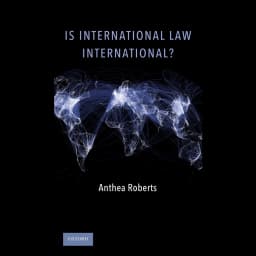
Multi-perspective analysis
Is International Law International?
Anthea Roberts · Oxford University Press, 2017
How international lawyers in different states see the same legal questions through fundamentally different lenses — patterns of difference, dominance, and disruption.
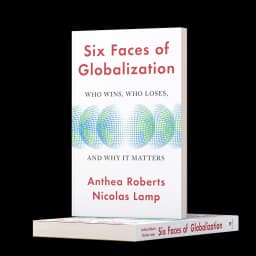
Multi-perspective synthesis
Six Faces of Globalization
Anthea Roberts & Nicolas Lamp · Harvard University Press, 2021
Six competing narratives about globalisation, held in tension rather than choosing sides. A methodology for integrative thinking about complex, contested problems.


Systemic driver mapping
Risk, Reward and Resilience
Anthea Roberts & Nicolas Lamp · Journal of International Economic Law, 2023
How economic drivers interact systemically — mapping risks, rewards, and resilience across trade, technology, and geopolitics. The foundation for Dragonfly's driver and systems analysis methodology.
“It helps us not only understand the best version of other sides' narratives, but also move beyond our own conceptual straitjackets.”
Dani Rodrik, Harvard — on Six Faces of Globalization
Proven in the Total Portfolio Approach
Sue Brake was one of the pioneers of the Total Portfolio Approach (TPA) — a way of investing that moves beyond traditional asset-class silos to evaluate the entire portfolio collectively, integrating multiple lenses, systemic connections, and scenario stress-testing. Under her leadership, the Future Fund prepared its portfolios for geo-fragmentation in 2022, having done the forward thinking in 2020. NZ Super has been the best-performing fund worldwide over 20 years. The Thinking Ahead Institute estimates that TPA combined with good governance improves portfolio performance by 1.0–1.5% per annum over the long term.
Sue didn't call it dragonfly thinking at the time — she arrived at the same principles independently through decades of investment practice. When she encountered the Dragonfly methodology, she recognised it as a more structured articulation of what she'd been doing. She is now scaling those principles by creating Dragonfly's AI workflows for sovereign wealth funds, pension funds, and endowments. She epitomises Dragonfly's approach of being expert-led and AI-enabled.

Sue Brake
Chair & Investment Vertical Lead
Former CIO, Australia's Future Fund ($300B). Pioneer of the Total Portfolio Approach.
Compound vision requires cognitive capacity humans can't sustain alone.
Holding multiple competing perspectives simultaneously, mapping their interactions, tracing feedback loops and tipping points — this is precisely what humans struggle to do alone. AI doesn't replace the judgement. It creates the cognitive capacity to sustain compound vision long enough to produce insight.
But that only works with the right structure. Our method codifies expert thinking into structured analytical workflows — repeatable steps that AI can execute rigorously. The critical difference is between using AI and directing AI to think well.
“The messy real world requires significant domain and application-specific reasoning that cannot efficiently be encoded in a general model. Enter cognitive architectures, or how your system thinks.”
Sequoia Capital
“Dragonfly's structured approach supports the kind of thinking that human teams often find difficult to sustain unaided.”
AI CoLab pilot participant
Compound vision
Eight thinking dimensions shape how Dragonfly sees. Not a checklist — ways of seeing that interact and compound. From actors and drivers through systems and scenarios to strategy and challenge.
Actors
Who else is in this picture — and how do they see it?
Map the landscape of actors, their perspectives, interests, and positions. Understanding who sees the problem differently is where compound vision starts.
Drivers
What forces are shaping outcomes?
Identify driving forces — political, economic, social, technological, legal, environmental. The most powerful forces often receive no attention because they are structural facts, not contested arguments.
Scale
What shifts when you zoom in or out?
Move between levels — individual, organisational, national, systemic. The same evidence looks different at each scale. Cross-scale interactions often contain the most important insights.
Systems
How do the pieces connect?
Map how drivers interact, reinforce, and constrain each other. Feedback loops, tipping points, and cascading effects that explain why some strategies fail despite sound analysis.
Scenarios
How does this unfold across different futures?
Not prediction. Conditional judgement. Build divergent futures from critical uncertainties and stress-test strategies against each one.
Interventions
Where’s the leverage, and what happens when we pull it?
Identify where and how to intervene. Map leverage points across system levels, design interventions with cascade awareness, and sequence actions with political-economy realism.
Challenge
How robust is our thinking?
The constant meta-cognitive check. Surface assumptions, blind spots, biases, and adversarial risks. If the analysis feels too clean, something is missing.
Strategy
What should we prioritise and why?
Synthesise across scenarios, interventions, and constraints. Distinguish between no-regret moves, contingent bets, and options worth keeping open.
The method, applied.
Our methodology compounds with AI capability. Every improvement in the underlying models makes our intelligence better, not our services obsolete. Whether you want us to run the analysis, transfer the capability, or train your team — the method is the same.
Commission intelligence
Tell us the question. We return an interactive analysis your team can interrogate and share — or we transfer the methodology so your team runs it.
Learn more CoursesLearn the method
Executive education in AI-enhanced strategic thinking. Hands-on programmes developed with Harvard Law School.
Learn more PlatformRun the analysis
You direct the analysis, evaluate the reasoning, and receive outputs structured for boards, committees, and leadership teams.
Learn more Featured analysisAI Through Dragonfly Eyes
Nine narratives about AI, mapped as mirror pairs. Seven interactive visualisations showing compound vision in action. Anthea Roberts, Harvard 2026.
Learn moreGet started
Tell us the strategic question.
A 30-minute conversation about your challenge. We'll show you what compound vision reveals — and whether Dragonfly is the right fit.