Case Studies
What Dragonfly looks like in real institutions, on real problems.
These case studies show how teams use Dragonfly to sharpen judgment, surface blind spots, and move from complexity to decision-ready action.
APS Capability Reinvestment Fund Pilot
In 2025, Dragonfly became the first homegrown GenAI system piloted by the Australian Public Service — delivered in partnership with DISR, AI CoLab, and the APS Academy.
Risk and policy teams surfaced blind spots across agencies. Strategy teams developed no-regret actions in live scenarios. Digital divisions compressed weeks of research into days.
Five teams used Dragonfly on real challenges — from supply chain security to energy transition policy — and every team found the same thing: it helped them think better and faster.
AI can help reduce blind spots in policy analysis.
DISR policy maker
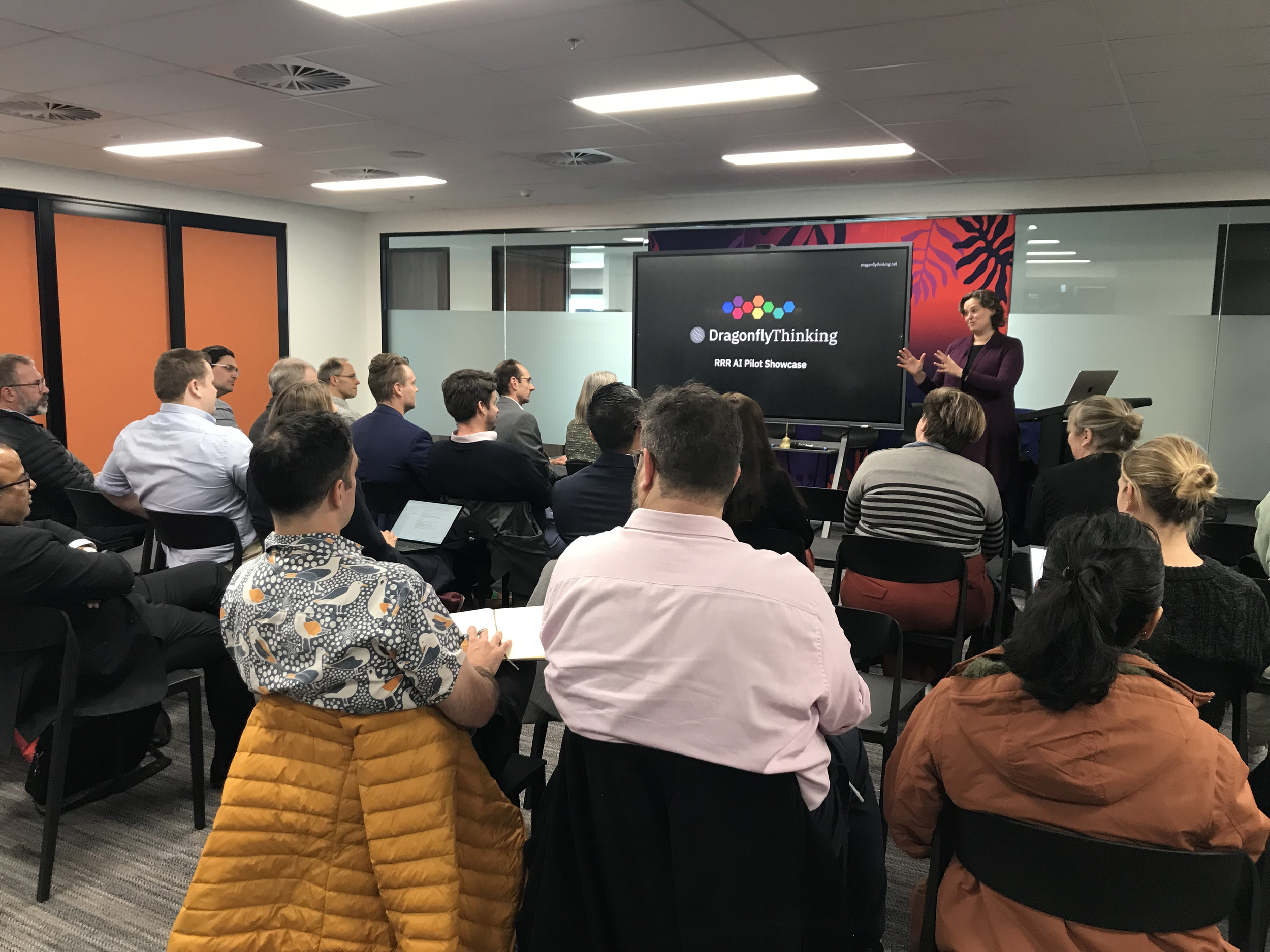
How APS teams used Dragonfly
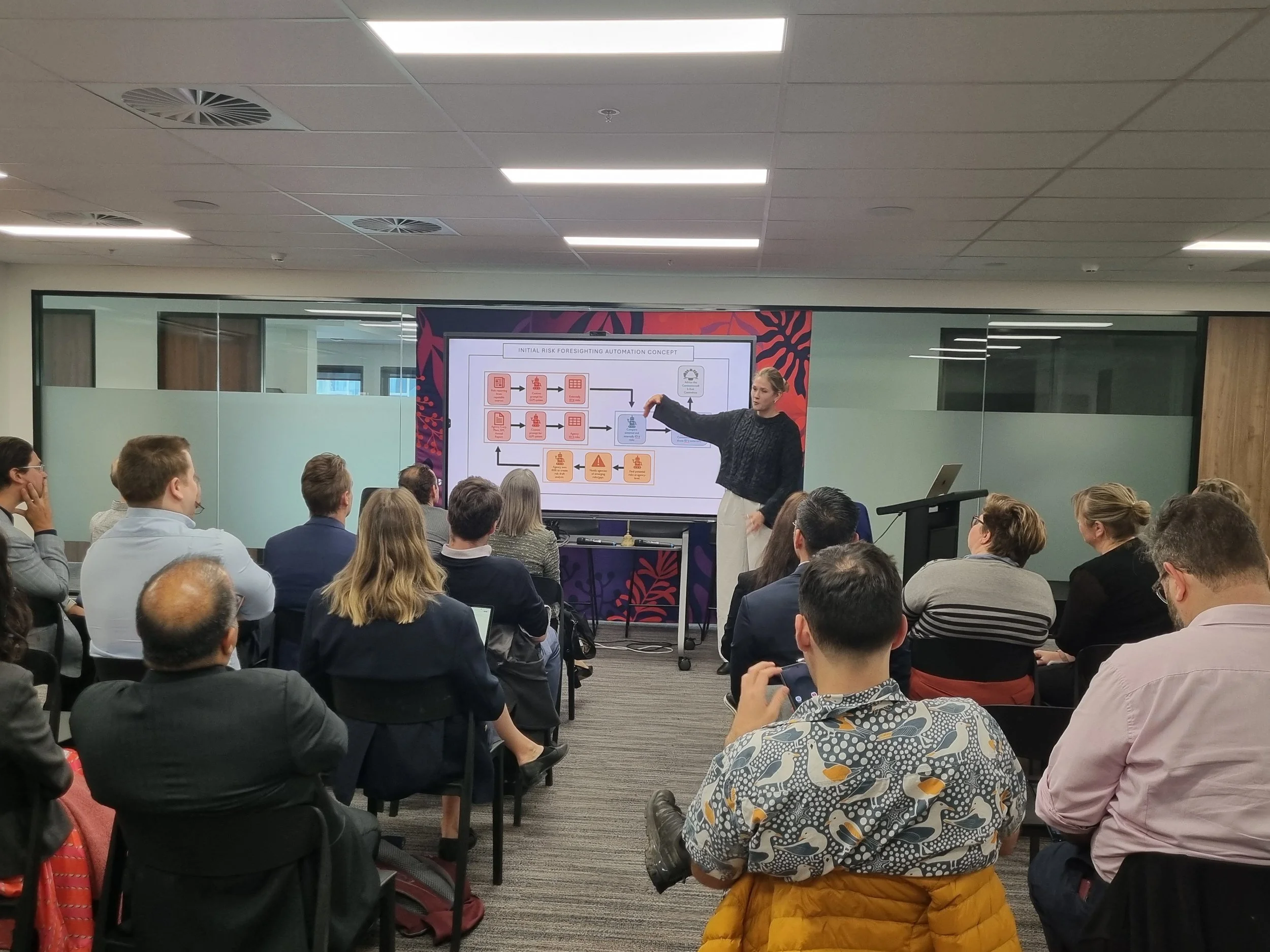
Risk Foresight at Scale
Chloe Tallentire, Department of Finance
Used Dragonfly’s Risk, Reward, and Resilience framework to co-design an AI-powered foresight platform for small agencies — surfacing hidden risks and scaling support across Comcover, the Australian Government’s insurance fund, to 170+ member agencies.
I’d used AI quite a lot but I had never seen a tool like Dragonfly before. It gave me something concrete I could show, adapt and use.
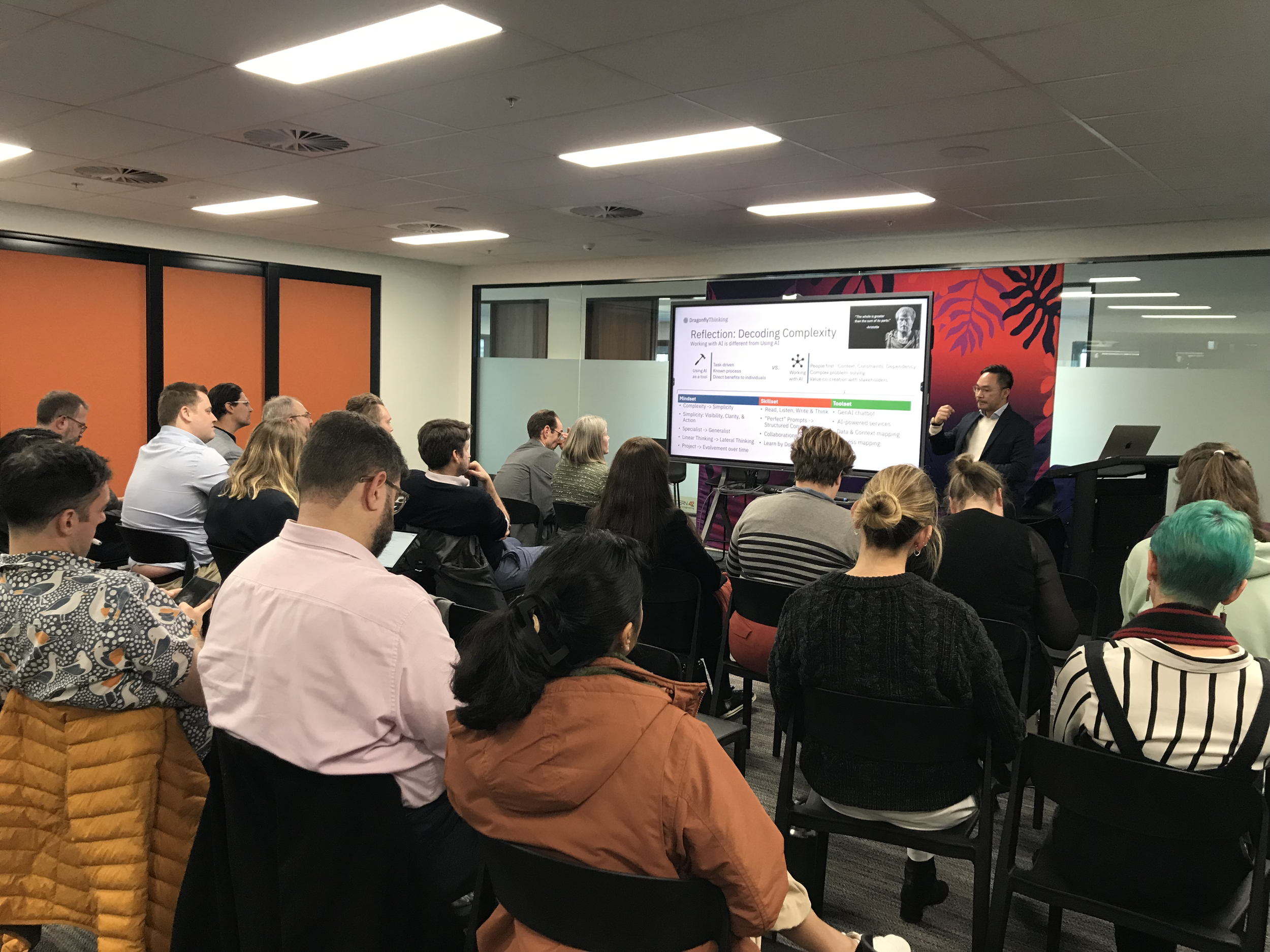
Supply Chain Security
Eric Nguyen, Digital Strategist & Executive Committee Member, Australian Computer Society
Developed a structured, high-impact strategy for supply chain security research.
Dragonfly expanded the depth of my research by at least three times and cut discovery time from weeks to days. More importantly, it changed the way I worked and thought.
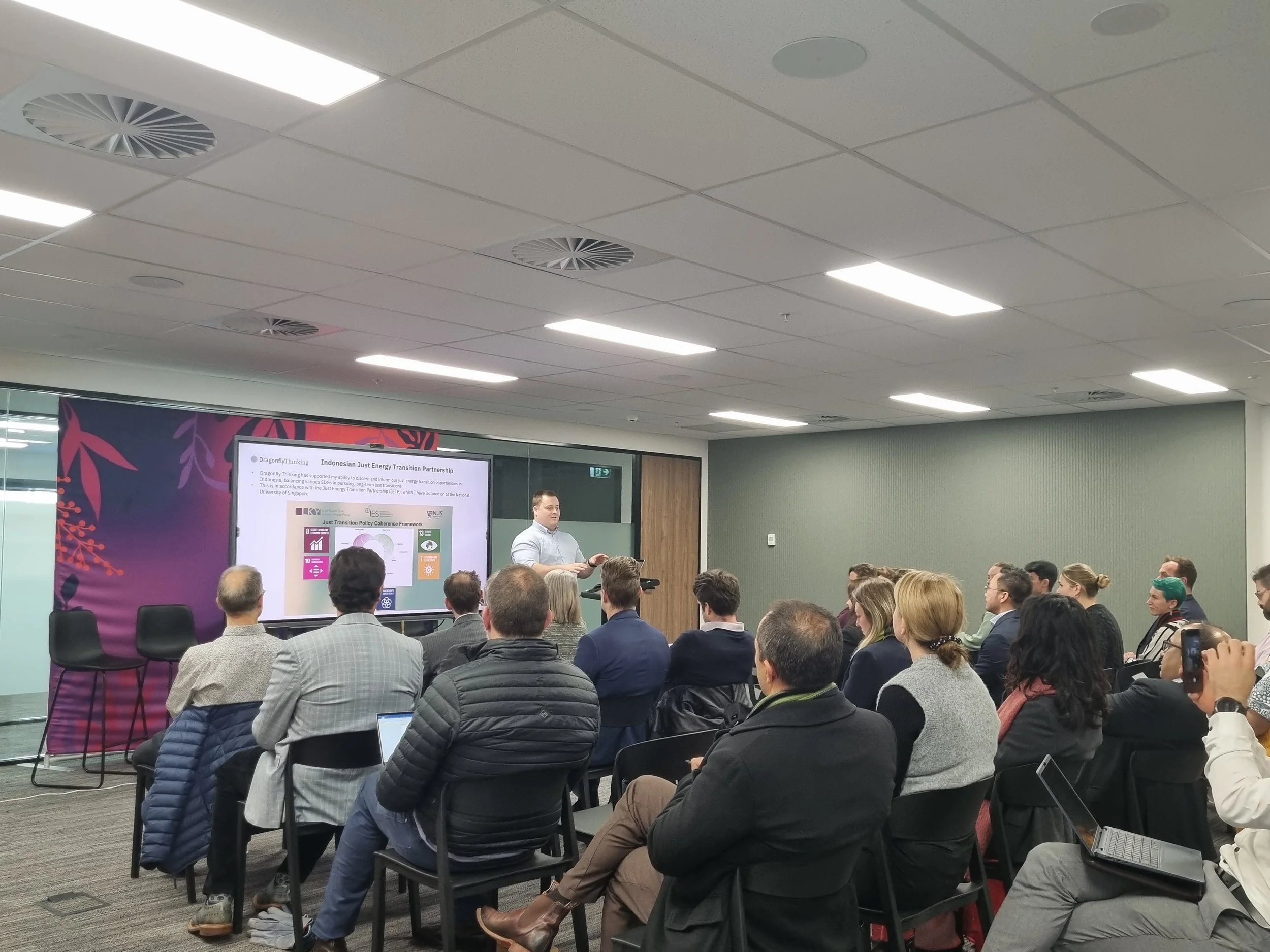
Energy Transition Pathways
James Balzer, Climate & Sustainability Advisor
Applied Dragonfly’s Perspectives view to weigh SDG-aligned trade-offs for Indonesia’s Just Energy Transition, bridging predictive modelling and prescriptive strategy.
Dragonfly Thinking helped me weigh short-, medium- and long-term trade-offs in Indonesia’s Just Energy Transition Partnership (JETP).
From development economics to Pacific leadership
Development organisations, Pacific security leaders, and philanthropic strategists applying structured analysis to problems that resist simple answers.
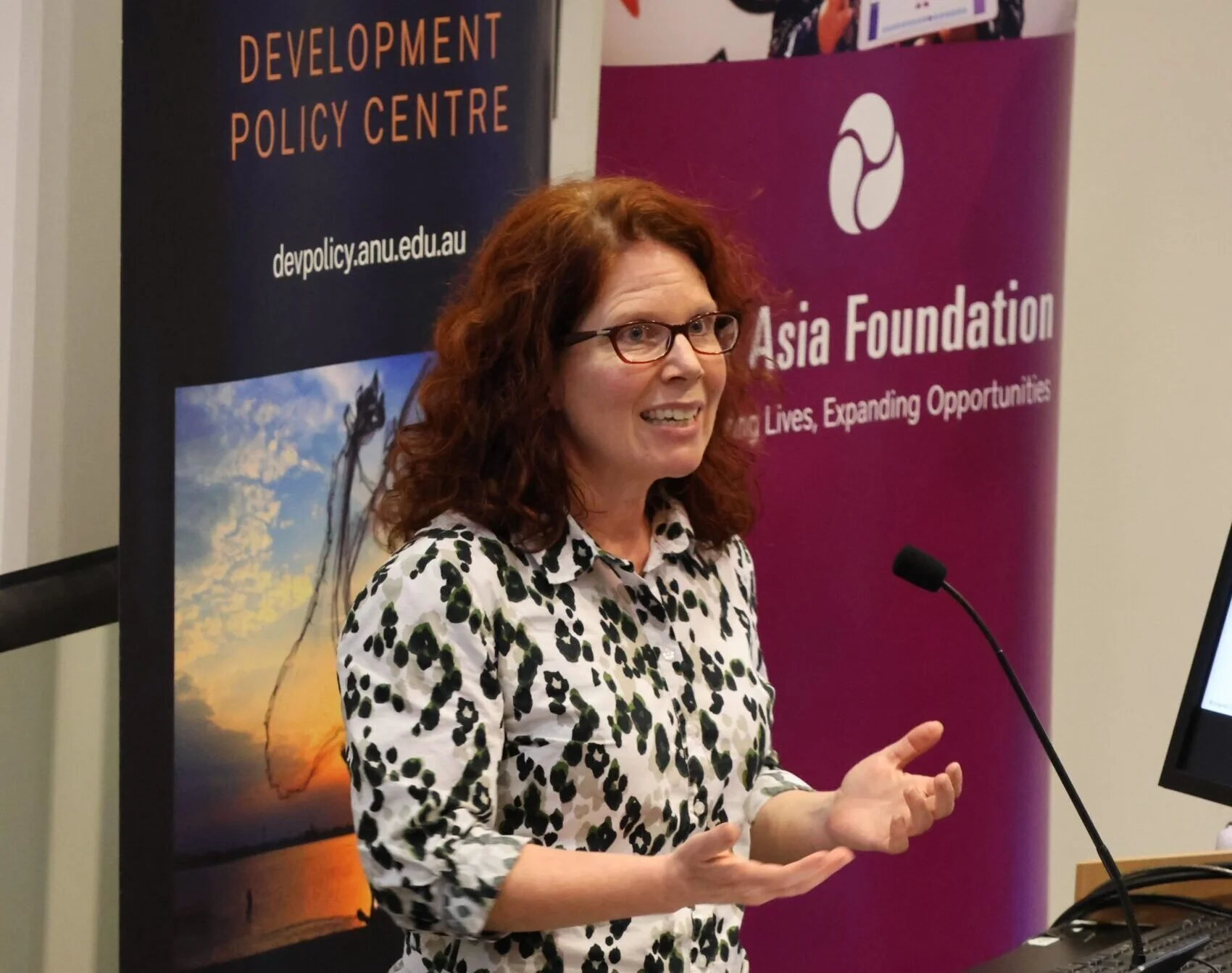
Keynote at the Australasian Aid Conference
Dragonfly co-founder Miranda Forsyth presented on how Dragonfly Thinking helps practitioners navigate complex development challenges.
What distinguishes Dragonfly Thinking from conventional AI tools is its cognitive architecture, which is layered over large language models like ChatGPT. Rather than simply generating responses, the system guides users through a process of structured analysis and incorporates multiple perspectives – much like its namesake insect’s compound eyes, which provide 360-degree vision.
Putting AI in aid, Development Policy Centre
Development Intelligence Lab
In a live two-hour experiment, lab analysts with no development-economics background used Dragonfly to map the risks, rewards, and resilience facing middle-income economies in Southeast Asia — producing board-ready, multi-perspective analysis that domain experts judged on par with their own.
Its primary benefit is that it helps us actually think better and make better decisions — and train our people to do the same.
Bridi Rice, CEO, Development Intelligence Lab
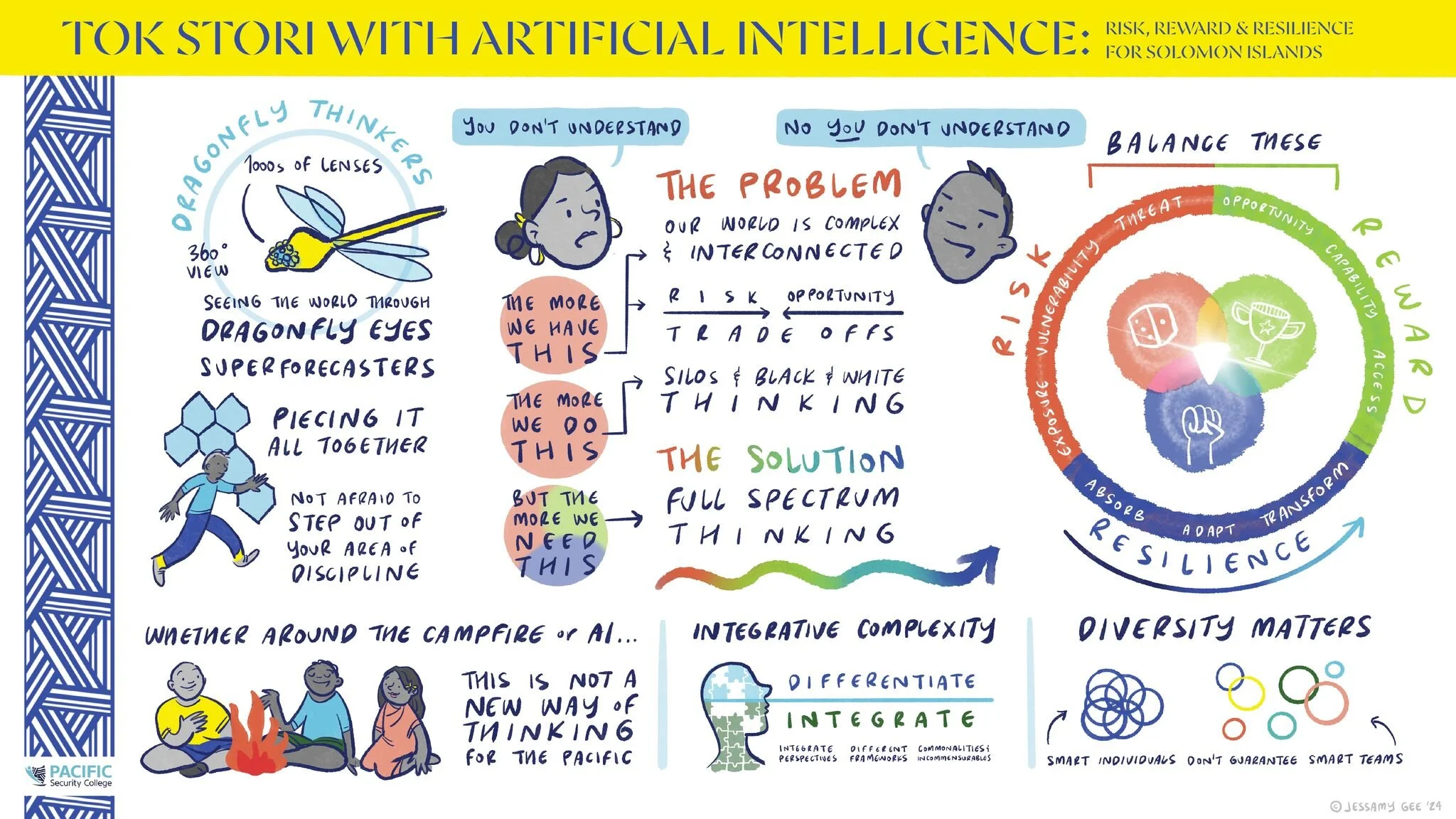
Pacific Leadership
Pacific security leaders used Dragonfly at executive retreats in PNG and Solomon Islands to analyse complex scenarios through multiple perspectives. In Solomon Islands, participants connected the tool to their Tok Stori tradition — describing it as creating meaning around the campfire, but now including voices from around the world.
Participants used the platform to analyse complex scenarios and different perspectives, demonstrating how the collaboration between humans and AI can support decision making.
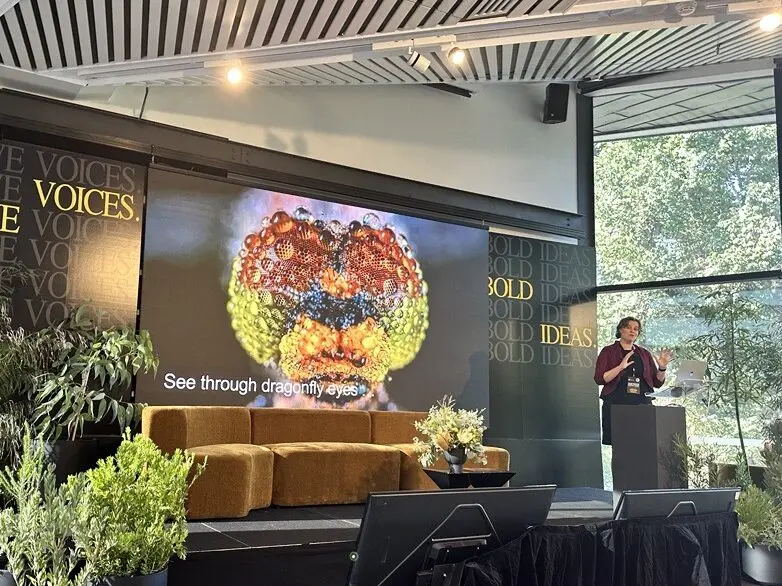
Philanthropy & Social Impact
Anthea presented on “Artificial Intelligence with Purpose” at the 2025 NEXUS Australia Summit in Melbourne, introducing full-spectrum thinking to over 200 next-generation philanthropists and impact investors. Aaron McNeilly of The Alchemists Global subsequently adopted Dragonfly's methods for his strategic philanthropy work.
Dragonfly Thinking is a powerful collaboration tool for navigating complex social impact initiatives; it gives me the strategic clarity needed to drive real, lasting change and engage diverse stakeholder portfolios.
Aaron McNeilly, The Alchemists Global
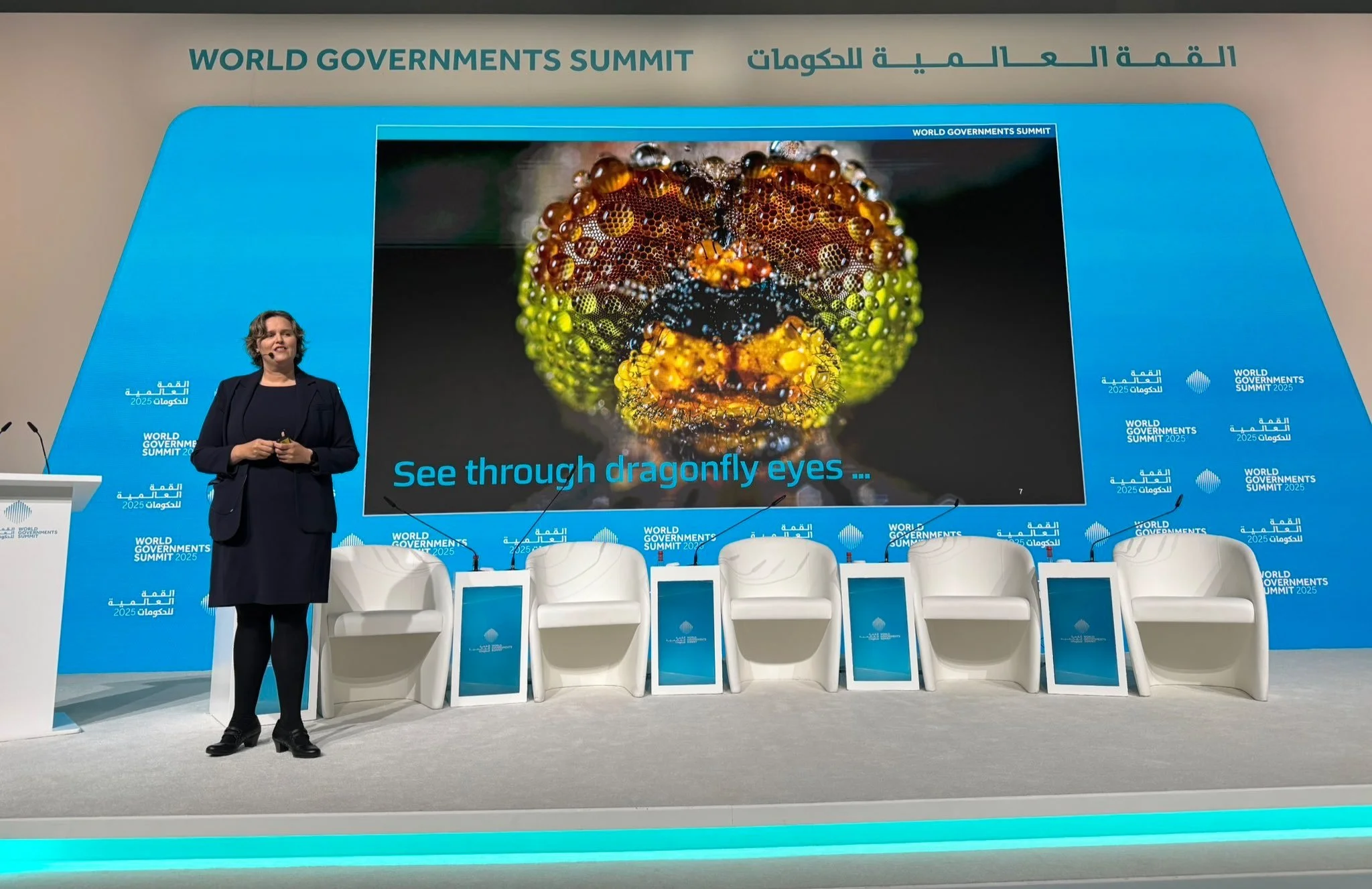 “The Power of Dragonfly Thinking in a New Economy” — World Government Summit 2025
From the AI CoLab to the World Government Summit
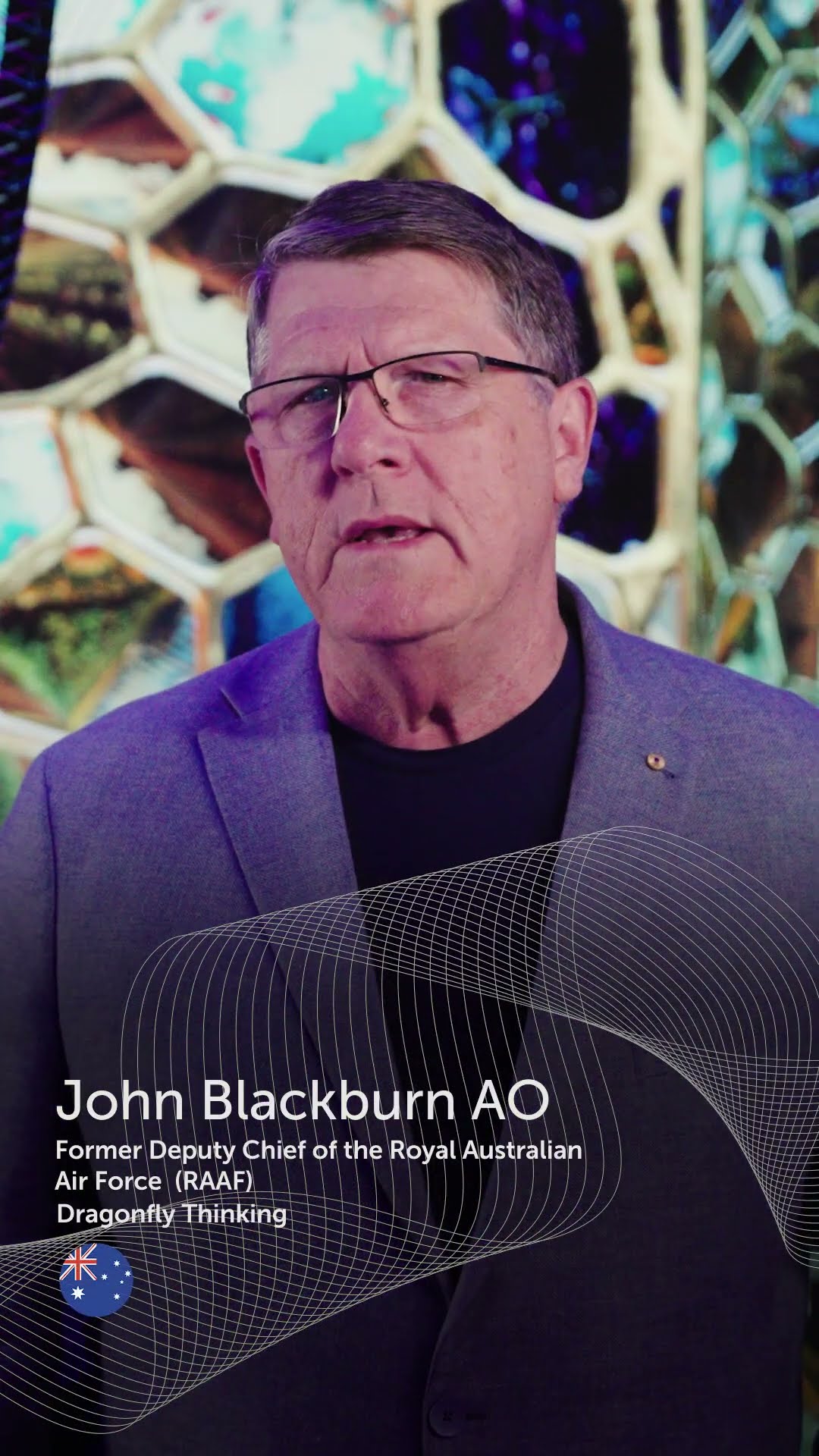
Air Vice-Marshal John Blackburn AO (Retd) partnered with Dragonfly to create systemic risk maps for Australian national resilience — surfacing interdependencies from fuel and food security to digital infrastructure and sovereign supply chains.
IntegratingDragonflyintoourprojectteamenabledustogaindeeperunderstandingofsystemicrisksandvulnerabilities,andidentifycreativestrategiestostrengthennationalresilience.
Air Vice-Marshal John Blackburn AO (Retd)
Board Chair, IIER-A
Edge of Government Exhibition
The Edge of Government 2025 exhibition, organised by the Mohammed Bin Rashid Centre for Government Innovation, presented 10 innovations under the theme The Butterfly Effect — recognising that even small decisions can create magnified effects across the world. Dragonfly Thinking was among the 10 showcased innovations.
Featured case studies
Australian National Risk Assessment
Enhancing economic, environmental, and health resilience — led by Air Vice-Marshal John Blackburn AO (Retd)
Sustainable Development in Low-Income Countries
Strategies for economically disadvantaged regions — Development Intelligence Lab
Fostering AI Innovation & Diffusion
Accelerating AI adoption across public and private sectors — AI CoLab

Anthea Roberts with Australia’s Ambassador to the UAE, Ridwaan Jadwat, on the sidelines of the World Government Summit in Dubai — where Dragonfly Thinking featured on the main stage and across the Edge of Government exhibition.
Read: Dragonfly Thinking at the World Governments Summit in Dubai