The Method
Strategic thinking requires compound vision
Decades of research across geopolitics, law, investment, and technology converge on one finding: those who understand complex problems best are rarely committed to a single lens. Thirteen specialist lens agents and seventy-plus analytical skills shape how Dragonfly sees — with each lens sharpening the others as they compound.
20 years of research. 28,000 predictions. One finding.
Philip Tetlock tracked 284 experts making 28,000 predictions over two decades — the largest study of expert judgment ever conducted. The experts with the biggest media profiles were the least accurate. Single-framework thinkers did worse than random guessing.
The forecasters who consistently outperformed — including intelligence analysts with access to classified data — shared one trait: they systematically sought out and integrated multiple perspectives. Tetlock called this “dragonfly eyes.”
Anthea Roberts applied this research across two decades of academic work — and it became the intellectual foundation for Dragonfly Thinking.
The name isn't branding. It's the thesis.
That is ‘dragonfly eye’ in operation. … Superforecasters pursue point-counterpoint discussions routinely, and they keep at them long past the point where most people would succumb to migraines.
Philip Tetlock & Dan Gardner
Superforecasting
The integrative complexity of the communications of major decision-makers is significantly lower during crises that eventually culminate in war than during crises that are resolved peacefully.
Suedfeld & Tetlock
Journal of Conflict Resolution, 1977
Built on two decades of multi-perspective research.
Dragonfly Thinking grew out of Anthea Roberts' academic research into how people see the same problems through different lenses — and what happens when you hold those perspectives in tension rather than choosing sides. Each project below built the next layer of the methodology.

Anthea Roberts
Multi-perspective analysis
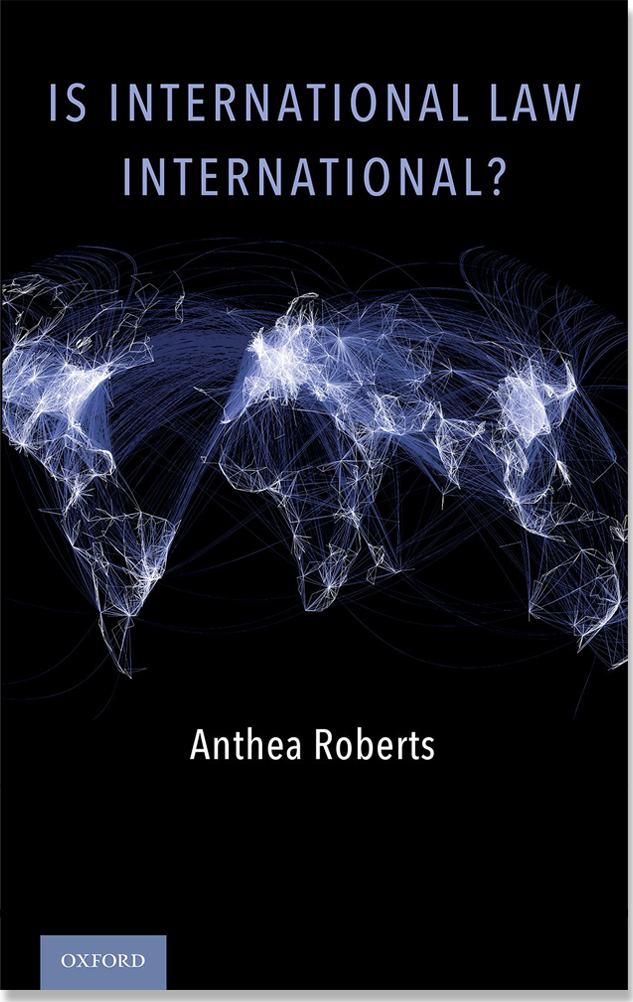
Is International Law International?
Anthea Roberts · Oxford University Press, 2017
How international lawyers in different states see the same legal questions through fundamentally different lenses — patterns of difference, dominance, and disruption.
Multi-perspective synthesis
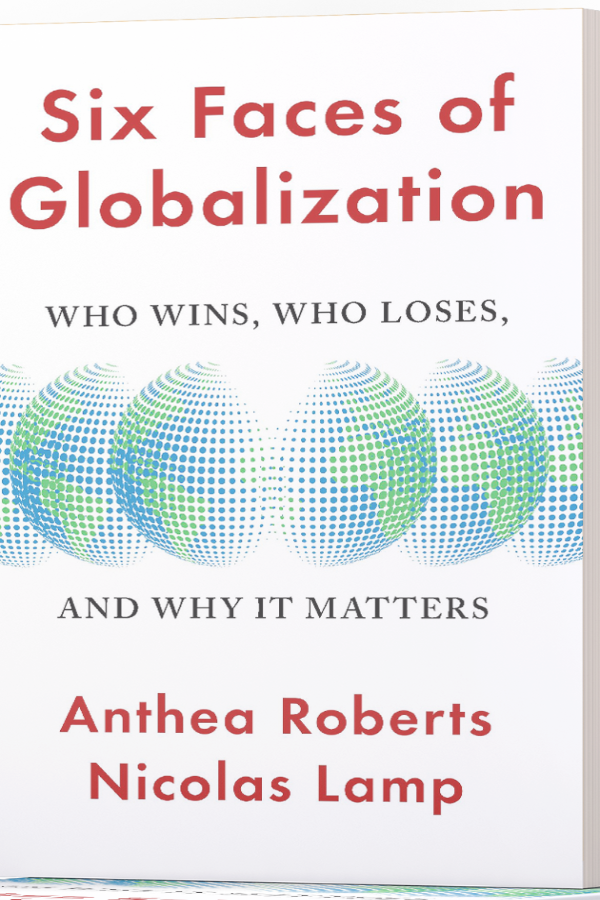
Six Faces of Globalization
Anthea Roberts & Nicolas Lamp · Harvard University Press, 2021
Six competing narratives about globalisation, held in tension rather than choosing sides. A methodology for integrative thinking about complex, contested problems.
Systemic driver mapping
Risk, Reward and Resilience
Anthea Roberts · Journal of International Economic Law, 2023 and Foreign Affairs, 2023
How economic drivers interact systemically — mapping risks, rewards, and resilience across trade, technology, and geopolitics. The foundation for Dragonfly's driver and systems analysis methodology.
It helps us not only understand the best version of other sides' narratives, but also move beyond our own conceptual straitjackets.
Dani Rodrik
Harvard — on Six Faces of Globalization
AI doesn't replace the judgement — it creates the cognitive capacity to sustain compound vision.
Holding multiple competing perspectives simultaneously, mapping their interactions, tracing feedback loops and tipping points — this is precisely what humans struggle to do alone. AI creates the cognitive capacity to sustain compound vision long enough to produce insight.
There is now field evidence for this. In a 776-person randomised trial at Procter & Gamble, professionals paired with AI — whether in teams or working alone — produced solutions that integrated technical and commercial perspectives at once; the disciplinary silos that usually divide specialists “virtually disappeared” (The Cybernetic Teammate, 2025).
But that only works with the right structure. Our method codifies expert thinking into structured analytical workflows — repeatable steps that AI can execute rigorously. The critical difference is between using AI and directing AI to think well.
The result is an agentic analytical system, not a chatbot: an orchestrator, 13 specialist lens agents, and 70+ analytical skills encoding expert tradecraft as readable, modifiable text.
We started using it to explain our thinking to others. That’s when it clicked — we were using AI to align the team, not just analyse the problem.
AI CoLab pilot participant
Australian Public Service
Dragonfly's structured approach supports the kind of thinking that human teams often find difficult to sustain unaided.
AI CoLab pilot participant
Australian Public Service
The method, applied.
Two published bodies of academic work from Anthea Roberts completed using Dragonfly agents — compound vision applied to a contested AI landscape, and to the legal profession in transition.
Harvard Project
AI in the Legal Profession
Anthea Roberts — Harvard Center on the Legal Profession, 2026
An ongoing research project on how generative AI is reshaping legal practice — interviews and analysis hosted on Harvard CLP, alongside the methodology work.
Visit on Harvard CLPNoema Essay
AI Through Dragonfly Eyes
Anthea Roberts — Noema Magazine, May 2026
Nine narratives about AI — three mirrored pairs and three standalone losses — published in Noema as “To Understand AI, Think Like a Dragonfly”, with interactive visualisations showing compound vision in action.
Explore the essay and visualisationsAI tools without frameworks are just chatbots creating slop.