Who Are You Going to Call?
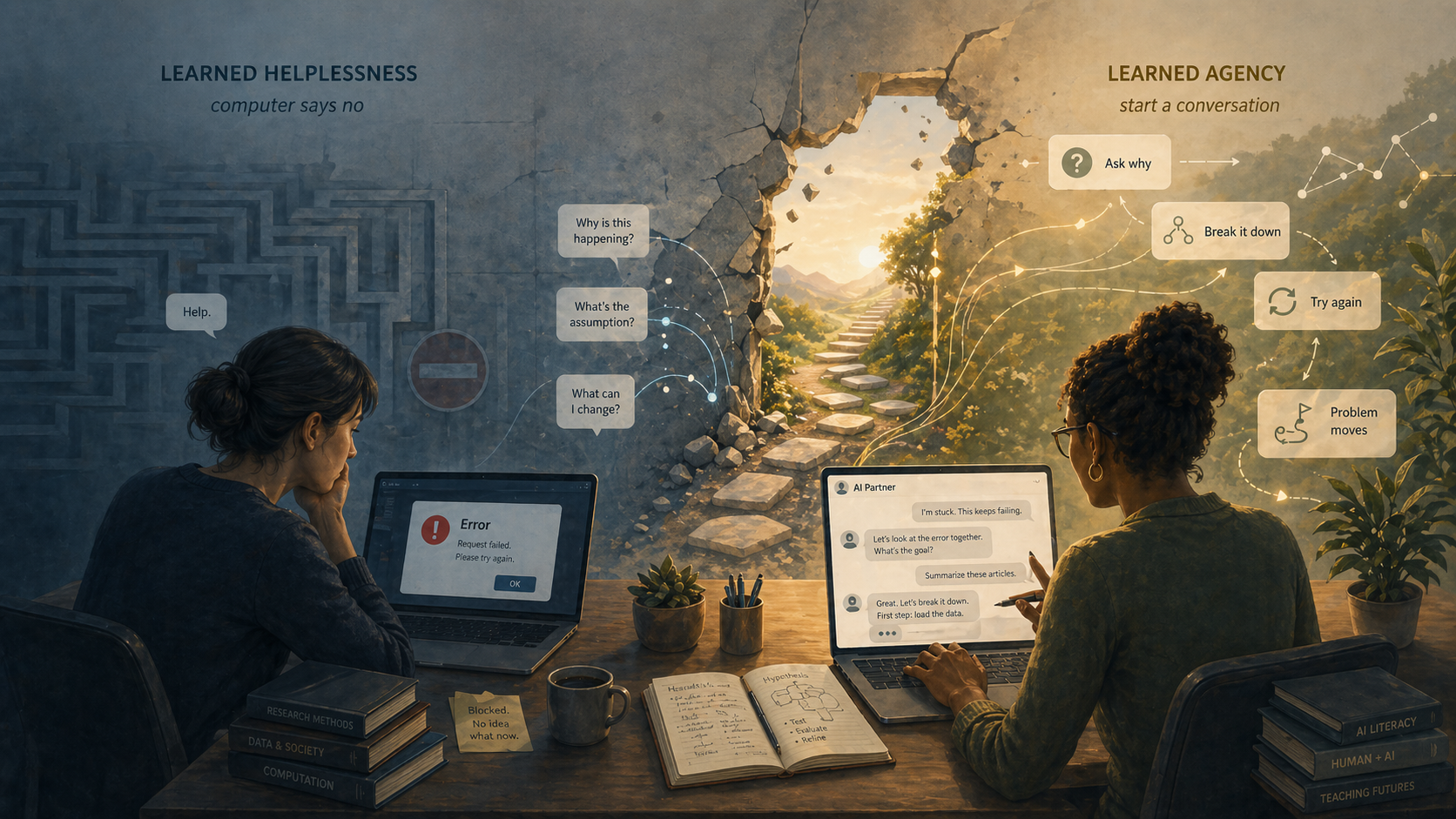
Anthea and I wrote a few weeks ago, in Learned Agency vs Learned Helplessness, that the right response to "computer says no" is to start a conversation with the machine, not to stop or ask a human. We called that moment of "computer says no" the wall: the error message that, for decades, has been the place where most non-technical users have been trained to give up and call an expert. We argued that starting a problem-solving conversation with AI can enable us to break through that wall. I still think that observation is valid, and have started to act on it more routinely. It is empowering!
But I have also been thinking about the broader consequences of this.
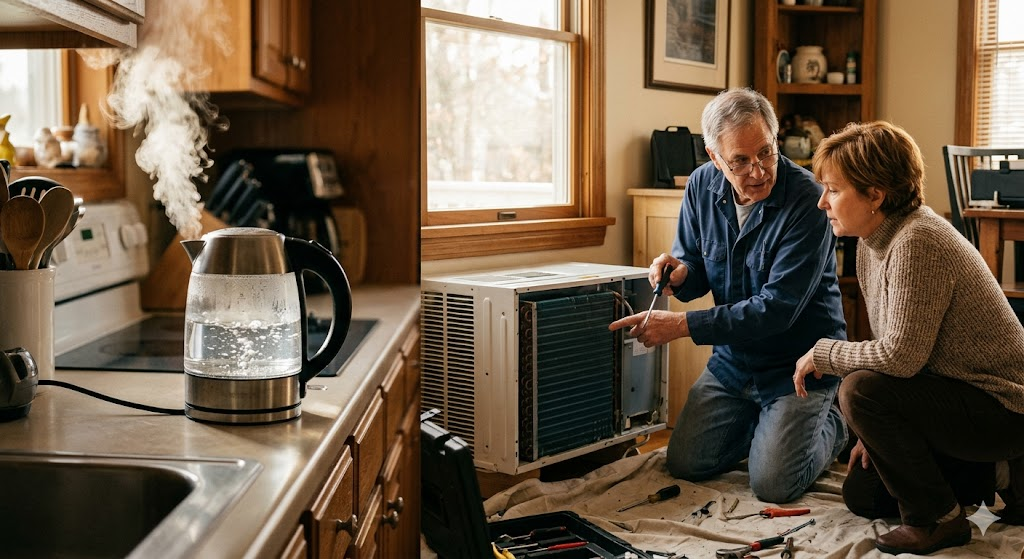
A month ago, the kind of error Anthea and I wrote about — the token limit, the failed agent, the unfamiliar prompt — would have triggered a call from me to her. We would solve the problem. But often we would also chat for a few minutes about a parenting dilemma one of us had, plan a walk for the weekend, or discuss a new movie. In a way, the technical question was like the offer to put on a kettle, and the conversation that ensued while it boiled mattered more than the cup of tea that would eventually be made.
Now I often don't need her help with the technical problems I encounter. Claude can answer them, and frequently more quickly, and sometimes with less exasperation. The wall comes down. But the kettle stays cold.
This is the first loss I have begun to notice, namely a relational one. When I phone Anthea about an API error, I am also asking her to spend a small piece of her finite hours on me, and she is doing the same in return. That mutual spending of attention is part of what builds and keeps the relationship. It can't be sourced from a chatbot, because there is no one on the other end to do the spending.
The pattern widens well beyond Anthea. A few years ago, the air conditioner playing up would have meant calling my uncle, who would have come over, stood in front of the unit with me while he explained what he was doing, and afterwards had a cup of tea and asked after my mother. Assembling a new piece of IKEA furniture would have meant wrangling my son into doing it as I am incapable of reading the diagrams. Each of these small instances of needing help has carried, alongside the help, the quiet maintenance of a relationship — the small mutual claims that hold a family together, a niece's on her uncle, a parent's on a teenager's grudging afternoon. The chatbot is making fewer and fewer of these calls necessary as we can solve these technical problems alone with AI.
This is, I should say, a process much older than AI. The advent of books long ago meant we could learn things without watching another human do them. The astonishing YouTube videos that so many strangers have generously and slightly oddly made — explaining how rivets are fitted, how a tap is replaced, how a knot is tied — have steadily made it possible to fix things in private, where once the only path was through a knowledgeable neighbour or relative. So AI is not the start of this disintermediation, but it accelerates it, and across a far broader range of questions than any earlier technology. The cumulative effect of what falls out of our lives when a great many small calls are no longer being made deserves attention.
There is also a second thing that passes between two people working through a problem together. When I take a question to Anthea, I leave the call not only with an answer but with some sense of how she arrived at it: what she ruled out, what else she knows that I do not, and where the question fits into a wider picture she has been building for years. I get to watch her think. That, too, is part of what the call was for, even when I did not put it that way.
I want to be careful here. The wall Anthea and I wrote about was a real wall. Plenty of people, me included until very recently, spent decades unable to do things they could have done because the machine said no and there was no one to ask. Asking the machine is the right move. I am not arguing for adding friction back where the friction was needless.
When I substitute Claude for Anthea on the API error, that is sensible and empowering. However, when the substitution means that I reduce those incidental opportunities for hanging out, then that is a problem.
Which leaves me, I think, with the need to be more deliberate than I have been about creating the conditions for those unstructured catch-ups. The temptation to use the time that AI saves to solve more problems is huge — but I think I need to use it to put into my relationships.
Learned Agency vs Learned Helplessness ended with a question: when you hit the next wall, do you stop, or do you start a conversation? I still think that is the right question. I would now add one more. Once the wall comes down and the problem moves: who do you call then?
Stay informed
Where AI meets strategic thinking.
New analysis on AI, strategy, and the intersection of both — from the team building tools to make better decisions, not just faster ones.